Nobody's Watching — And That's Exactly Why Your Best Ideas Never Get Finished
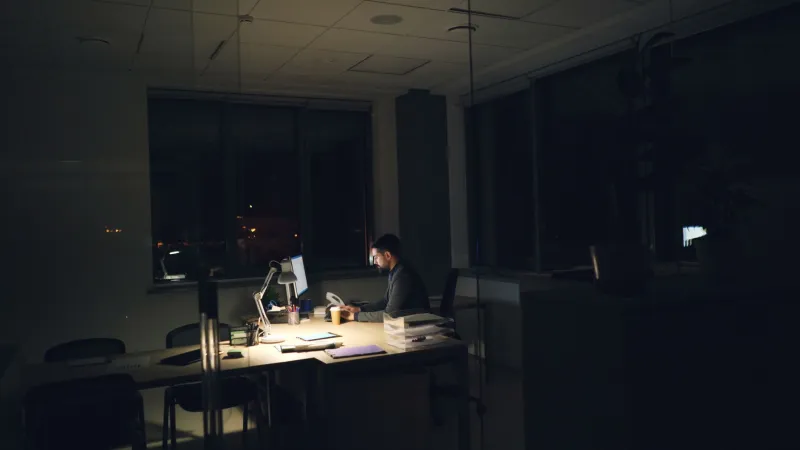
The Project That Was Going to Change Everything
You know the one. The course you were going to launch by Q2. The content series you mapped out on a Saturday morning with three cups of coffee and genuine excitement. The template pack you designed, half-built, and saved in a folder called "FINAL_v2_REAL_THIS_TIME."
It's not that you ran out of ideas. You ran out of structure.
For most solo creators and small-team operators, the projects that matter most — the ones with real potential — are also the ones with the loosest deadlines. Client work gets done because someone's waiting on it. Invoices get sent because rent is due. But that passion project? It only has you to answer to. And apparently, you're pretty easy to negotiate with.
This is what we'd call the accountability gap, and it's one of the most quietly destructive forces in the creator economy.
Why External Pressure Works Better Than Willpower
Here's something a little uncomfortable: you're not lazy. You're just human.
Research in behavioral psychology has consistently shown that people are more likely to follow through on commitments when someone else is aware of them. It's not a character flaw — it's how we're wired. External deadlines tap into social consequence, which is a much stronger motivator than internal intention.
When a client is waiting on a deliverable, missing it has a tangible cost. When you're waiting on yourself, the cost feels abstract — until suddenly six months have passed and that "almost done" project is still sitting at 60%.
The fix isn't to hire an accountability coach or find a business bestie (though those can help). The real solution is to design systems that replicate the feeling of external pressure — without needing another person in the room.
Build the Illusion of an Audience
One of the most effective tricks successful solo creators use is treating their own projects like client work. That means giving them actual due dates on an actual calendar, writing briefs with scope and deliverables, and — this part matters — telling someone about it.
That last step is low-tech but surprisingly powerful. Announce your project publicly, even in a small way. Post about it in a creator community. Tell your email list it's coming. Drop it in a Slack group. Once other people know it exists, it stops being optional.
You don't need thousands of followers for this to work. You need one person who will ask you about it next week.
Milestone Mapping: The System That Keeps Momentum Alive
Big projects stall because they feel big. The solution isn't motivation — it's decomposition.
Break every passion project into micro-milestones with specific completion criteria. Not "work on the course" but "finish the outline for Module 3 by Thursday at noon." The more specific the milestone, the harder it is to fudge what "done" actually means.
Here's a simple framework:
- Define the finish line first. What does the completed project look like? Be specific.
- Work backwards in two-week sprints. What has to be true two weeks before launch? Four weeks?
- Assign each milestone a hard date. Not a range. A single date.
- Create a weekly check-in ritual. Even five minutes on Monday morning to review where you stand changes the relationship you have with your own project.
If you're using a project management tool, this is exactly where templates earn their keep. A pre-built accountability framework — with milestone slots, check-in prompts, and a built-in review cadence — removes the friction of setting this up from scratch every single time.
The "Commitment Device" Trick
Behavioral economists have a term for structures that lock in future behavior: commitment devices. Odysseus tied himself to the mast. You can do something slightly less dramatic.
A few creator-friendly commitment devices that actually work:
Pre-sell before you build. Nothing motivates finishing a course or digital product like people having already paid for it. Even a waitlist with a launch date creates real pressure.
Book the thing. If your project requires a launch event, a podcast interview, or a live demo — schedule it now. A calendar event with someone else's name on it is incredibly hard to move.
Set financial stakes. Some creators use apps that donate money to a cause they don't support if they miss a deadline. Losing twenty dollars to a political campaign you oppose is a surprisingly effective productivity tool.
Create a visible scoreboard. A simple progress tracker — even a handwritten checklist on a whiteboard — makes your progress (or lack of it) impossible to ignore. Out of sight really is out of mind.
When the Problem Is the Project Itself
Sometimes a project stalls not because of accountability but because something about the project no longer fits. Before you layer on more systems, it's worth asking: do you actually still want to finish this?
Passion projects evolve. The idea you had eighteen months ago might not reflect where your business is headed today. There's no shame in officially shelving something — in fact, making that call intentionally is far better than letting it linger in limbo and drain mental energy every time you see it in your task manager.
A quick audit question: if this project launched tomorrow, would you be excited? If the honest answer is "not really," that's useful information. Kill it cleanly, archive the assets, and redirect that energy somewhere that actually fires you up.
Designing a Workflow That Holds You Accountable — Even on the Hard Weeks
The goal isn't perfect follow-through. It's building a system that makes it easier to get back on track than to stay off it.
That means:
- Friction-free check-ins. Your weekly review shouldn't take 45 minutes. Build a template that takes five.
- Pre-planned recovery steps. What do you do when you miss a milestone? Having a written answer removes the shame spiral and replaces it with a next action.
- A "minimum viable week" standard. Define the smallest amount of progress that still counts as forward momentum. On a brutal week, hitting that floor is a win.
The creators who actually ship their passion projects aren't the ones with the most discipline. They're the ones who've built environments where following through is the path of least resistance.
You don't have to white-knuckle your way through every solo project. You just have to build the right scaffolding — and then trust it to hold.